WaterTalk: Hydrobiogeochemistry and health risks of geogenic contaminant
Federation Hall - Catering and Events Services
- Main Hall
Tuesday,
Jul 21, 2026 at 11:00 AM
- 12:00 PM EDT
{
"name":"WaterTalk: Hydrobiogeochemistry and health risks of geogenic contaminant",
"description": "https:\/\/ticketfi.com\/event\/7025\/watertalk-hydrobiogeochemistry-and-health-risks-of-geogenic-contaminant\n\nHydrobiogeochemistry and health risks of geogenic contaminants in groundwater systems\n\n\nAs part of the Water Institute's WaterTalks lecture series, Yanxin Wang, Professor, State Key Laboratory of Geomicrobiology and Environmental Changes & School of Environmental Studies, China University of Geosciences, will present Hydrobiogeochemistry and health risks of geogenic contaminants in groundwater systems.\n\nThis event is in person in Fed Hall. \n\nMore Info\n\nWorldwide, geogenic contaminated groundwater (GCG, e.g., high As\/F\/I) threatens over 450 million people. GCG occurs in Quaternary alluvial-lacustrine aquifers characterized by fine-grained sediments, sluggish flow, limited recharge, and strongly reducing conditions. Microorganisms at mineral-water interfaces drive the redox-dependent mobilization of geogenic contaminants. In high-As groundwater, iron- and sulfate-reducing bacteria promote reductive dissolution of As-bearing iron oxides, while methanogenesis enhances Fe(III) reduction and arsenic methylation. In high-I systems, iodate-reducing bacteria, iron reducers, sulfate reducers, and anaerobic methane oxidizers collectively facilitate iodine enrichment and dehalogenation. To predict unknown GCG-affected areas worldwide, we applied machine learning models including artificial neural networks, random forests, Siamese network-based transfer learning, and ADASYN-optimized frameworks. These models effectively capture nonlinear relationships between environmental indicators and contaminant levels, address data scarcity and class imbalance, and generate high-resolution risk maps with robust test accuracy. Key predictors were identified to delineate high-risk basins. Our findings advance understanding of GCG genesis and spatiotemporal distribution, providing practical guidance for targeted investigation, monitoring, remediation, and risk mitigation in data-poor regions. This supports sustainable safe groundwater supply and protects ecosystem and human health.\n\nSpeaker Bio\n\nYanxin WANG is a professor of Hydrogeology and Environmental Engineering at China University of Geosciences (CUG), an academician of Chinese Academy of Sciences and Fellow of International Association of GeoChemistry (IAGC) . He obtained BSc in Hydrogeology and Engineering Geology from Nanjing University in 1984 and PhD in Hydrogeology from CUG in 1990. He spent one year at University of Waterloo (UW) as a visiting professor in 1998-1999 and received the degree Doctor of Science (honoris causa) of UW in 2023.\nHe and his group have made substantial efforts in studying mechanisms of groundwater contamination and developing cost-effective technologies of site remediation, to provide theoretical and technological support for safe supply of drinking water. They have been actively engaged in international collaborations and successfully integrated inter-disciplinary approaches of hydrogeochemistry, groundwater hydraulics, sedimentology, geostatistics, isotope geochemistry, ecohydrology and geomicrobiology, to better understand the processes and factors controlling mobilization\/immobilization of geogenic As, F, and I in aquifer systems. Their case study areas include Datong Basin, Hetao basin and North China Plain and central Yangtze River Basin. Since 1990, he and his multi-disciplinary international research group have been studying the hydrogeochemistry of geothermal fluids across China and in the Baikal Rift Zone of Russia and has found, for the first time, high temperature (up to 160 OC, at Tianzhen, Shanxi province) geothermal resource at depth shallower than 2000 m in the eastern part of China. He was the recipient of John Hem Award of National Ground Water Association of USA, Applied Hydrogeology Award of International Association of Hdrogeologists, and Vernadsky Medal of IAGC. He is a member of the editorial committee of Annual Review of Environment and Resources and National Science Review, and the chief editor of Journal of Earth Science.\n \n",
"startDate":"2026-07-21",
"endDate":"2026-07-21",
"startTime":"11:00",
"endTime":"12:00",
"location":"Federation Hall - Catering and Events Services Main Hall - ",
"label":"Add to Calendar",
"options":[
"Apple",
"Google",
"iCal",
"Microsoft365",
"Outlook.com",
"Yahoo"
],
"timeZone":"US/Eastern",
"trigger":"click",
"inline":true,
"listStyle":"modal",
"iCalFileName":"invite.ics"
}
Event Details
Hydrobiogeochemistry and health risks of geogenic contaminants in groundwater systems
As part of the Water Institute's WaterTalks lecture series, Yanxin Wang, Professor, State Key Laboratory of Geomicrobiology and Environmental Changes & School of Environmental Studies, China University of Geosciences, will present Hydrobiogeochemistry and health risks of geogenic contaminants in groundwater systems.
This event is in person in Fed Hall.
More Info
Worldwide, geogenic contaminated groundwater (GCG, e.g., high As/F/I) threatens over 450 million people. GCG occurs in Quaternary alluvial-lacustrine aquifers characterized by fine-grained sediments, sluggish flow, limited recharge, and strongly reducing conditions. Microorganisms at mineral-water interfaces drive the redox-dependent mobilization of geogenic contaminants. In high-As groundwater, iron- and sulfate-reducing bacteria promote reductive dissolution of As-bearing iron oxides, while methanogenesis enhances Fe(III) reduction and arsenic methylation. In high-I systems, iodate-reducing bacteria, iron reducers, sulfate reducers, and anaerobic methane oxidizers collectively facilitate iodine enrichment and dehalogenation. To predict unknown GCG-affected areas worldwide, we applied machine learning models including artificial neural networks, random forests, Siamese network-based transfer learning, and ADASYN-optimized frameworks. These models effectively capture nonlinear relationships between environmental indicators and contaminant levels, address data scarcity and class imbalance, and generate high-resolution risk maps with robust test accuracy. Key predictors were identified to delineate high-risk basins. Our findings advance understanding of GCG genesis and spatiotemporal distribution, providing practical guidance for targeted investigation, monitoring, remediation, and risk mitigation in data-poor regions. This supports sustainable safe groundwater supply and protects ecosystem and human health.
Speaker Bio
Yanxin WANG is a professor of Hydrogeology and Environmental Engineering at China University of Geosciences (CUG), an academician of Chinese Academy of Sciences and Fellow of International Association of GeoChemistry (IAGC) . He obtained BSc in Hydrogeology and Engineering Geology from Nanjing University in 1984 and PhD in Hydrogeology from CUG in 1990. He spent one year at University of Waterloo (UW) as a visiting professor in 1998-1999 and received the degree Doctor of Science (honoris causa) of UW in 2023.
He and his group have made substantial efforts in studying mechanisms of groundwater contamination and developing cost-effective technologies of site remediation, to provide theoretical and technological support for safe supply of drinking water. They have been actively engaged in international collaborations and successfully integrated inter-disciplinary approaches of hydrogeochemistry, groundwater hydraulics, sedimentology, geostatistics, isotope geochemistry, ecohydrology and geomicrobiology, to better understand the processes and factors controlling mobilization/immobilization of geogenic As, F, and I in aquifer systems. Their case study areas include Datong Basin, Hetao basin and North China Plain and central Yangtze River Basin. Since 1990, he and his multi-disciplinary international research group have been studying the hydrogeochemistry of geothermal fluids across China and in the Baikal Rift Zone of Russia and has found, for the first time, high temperature (up to 160 OC, at Tianzhen, Shanxi province) geothermal resource at depth shallower than 2000 m in the eastern part of China. He was the recipient of John Hem Award of National Ground Water Association of USA, Applied Hydrogeology Award of International Association of Hdrogeologists, and Vernadsky Medal of IAGC. He is a member of the editorial committee of Annual Review of Environment and Resources and National Science Review, and the chief editor of Journal of Earth Science.
Speakers
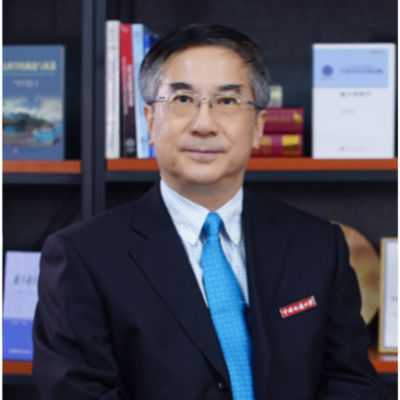
State Key Laboratory of Geomicrobiology and Environmental Changes & School of Environmental Studies
China University of Geosc
Location
Federation Hall - Catering and Events Services - Main Hall
200 University Avenue West Waterloo, ON N2L 3G1 CA
Tickets
Type |
Price |
|---|---|
|
Free Admission - WaterTalk |
Free |
Organizer Details

Water's Organization
The Water Institute
uwaterloo.ca/water-institute
Join our mailing list!


